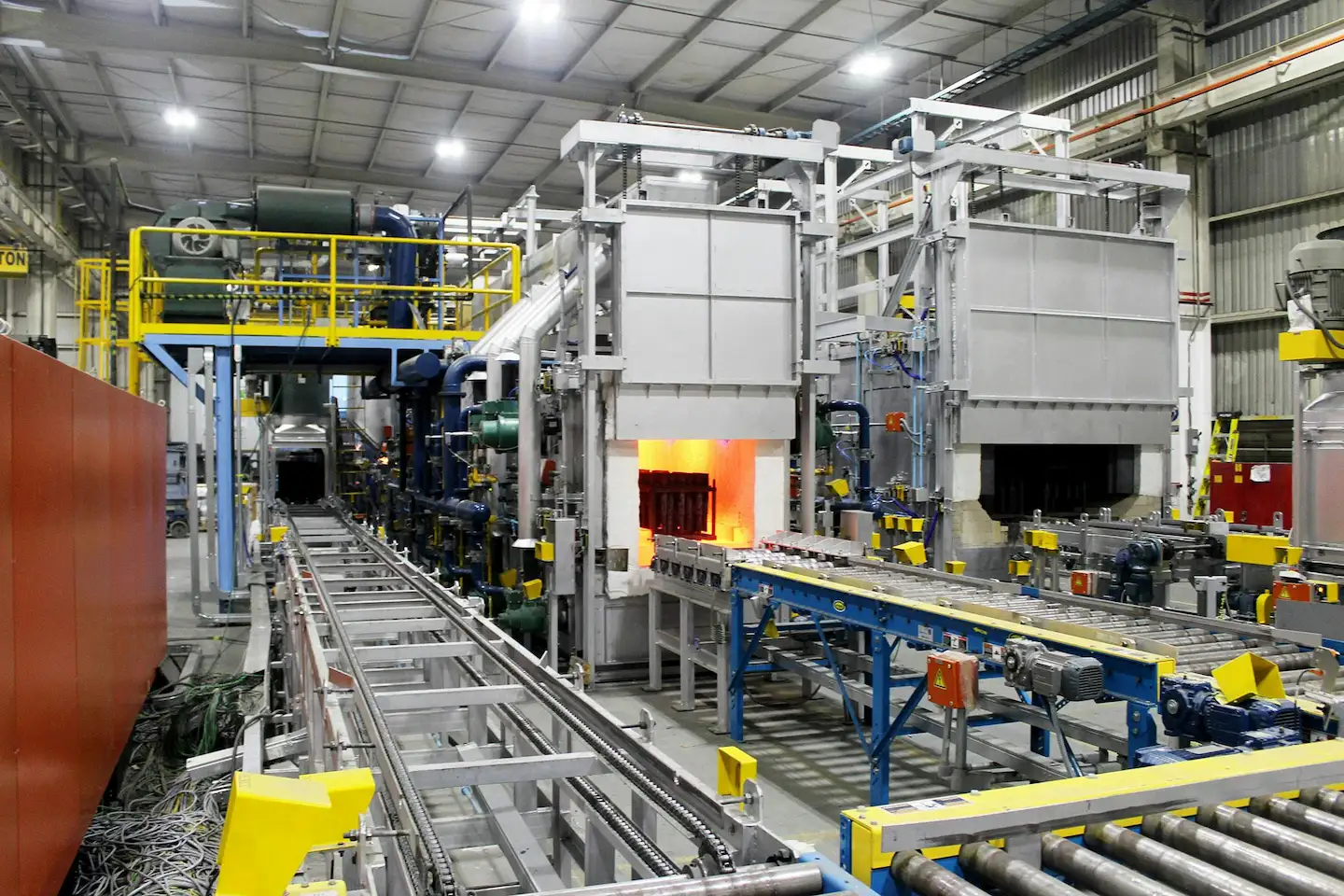
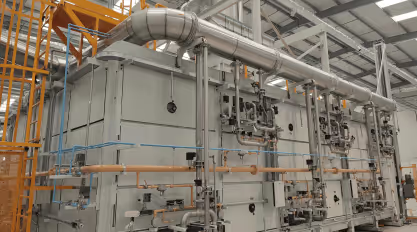
Annealing is a crucial heat treatment process that enhances the performance and workability of metals. By using a dedicated annealing furnace or oven, manufacturers gain precise control over temperature and atmosphere—ensuring consistent, high-quality results.
Key benefits of annealing metal:
1. Improves Ductility and Malleability
Annealing softens metal, making it more ductile and easier to shape, bend, or machine. This is especially important in manufacturing processes that involve forming or drawing.
2. Relieves Internal Stresses
During machining, welding, or cold working, metals develop internal stresses. Annealing helps eliminate these stresses, reducing the risk of warping, cracking, or failure in later stages.
3. Refines Grain Structure
The controlled heating and cooling cycle refines the metal’s grain structure, improving uniformity and enhancing mechanical properties.
4. Restores Electrical Conductivity
For materials like copper, annealing can restore lost electrical conductivity after work-hardening, which is vital in electrical and electronic applications.
5. Enhances Corrosion Resistance
In stainless steels and certain alloys, proper annealing can improve corrosion resistance by redistributing alloying elements uniformly throughout the material.
6. Improves Workability for Subsequent Processing
Annealed metals are easier to cut, form, and weld—streamlining downstream manufacturing operations and extending tool life.
Why use an annealing furnace or oven?
- Consistent temperature control for uniform results
- Programmable cycles for different materials and applications
- Improved efficiency and reduced rejection rates
- Safe, enclosed environment that protects the material from contaminants
With decades of international experience, NUTEC Bickley manufactures annealing furnaces for various industries worldwide, ensuring that each system is aligned with real production needs. Contact us!