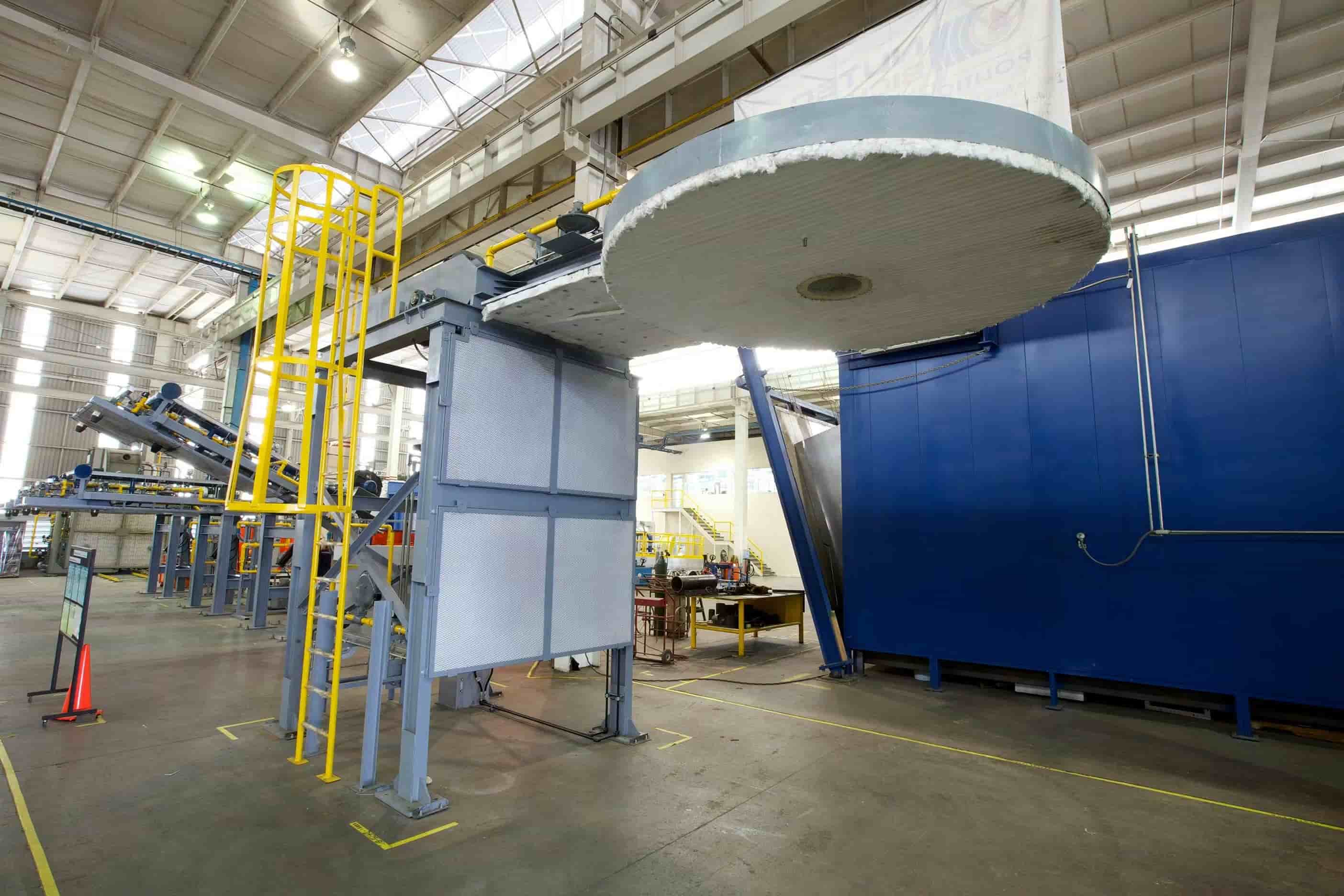
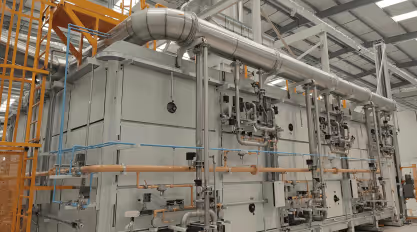
In a iron and steel plant, operational continuity depends on a highly synchronized sequence of processes, where any interruption can result in significant economic losses and impact the productivity of the entire production line. Within this chain, one of the most critical elements is the operation of steel ladles.
After the melting of scrap and direct reduced iron (DRI) in the electric arc furnace, the molten steel is tapped into these ladles to begin the secondary refining stage. Ladles are designed to withstand extreme operating conditions and are internally lined with specialized refractory materials capable of resisting high temperatures, thermal shock, mechanical erosion, and chemical attack from both steel and slag.
Once refining is complete, the ladles are transported by overhead cranes to the continuous casting machine. At this stage, the steel is transferred in a controlled manner into the tundish and subsequently solidified to produce the semi-finished products that feed rolling mills, such as billets, blooms, or slabs.
This cycle represents the heart of the steelmaking process and requires precise coordination between every stage. Since the electric arc furnace cannot stop production while waiting for an available ladle, steel plants maintain multiple ladles operating in continuous rotation. While one ladle is being used in continuous casting, others may be in refining, transportation, maintenance, or preparation for receiving molten steel again.
How does the ladle preheating process work in the steel industry?
To ensure uninterrupted operation, there must always be at least one ladle ready to receive steel from the electric arc furnace. However, a ladle cannot safely receive molten steel if its refractory lining is cold, as this would lead to:
- Severe thermal shock
- Reduced refractory life
- Significant heat losses
- Potential operational risks.
Ladles must be maintained at temperatures above 1,100°C (2,012°F) before being returned to service. This is accomplished using ladle preheaters, systems specifically designed to raise and maintain refractory temperature in a uniform and controlled manner.
Benefits of Ladle Preheaters
Ladle preheaters play a strategic role within the steel plant, as they not only ensure ladle availability but also help to:
- Extend refractory service life
- Reduce overall process energy consumption
- Minimize steel temperature losses
- Improve metallurgical stability
- Increase operational safety
In this context, NUTEC Bickley ladle preheaters have been developed to meet the demands of modern steelmaking operations by integrating advanced combustion, control, and thermal efficiency technologies. These systems provide uniform, reliable, and energy-efficient heating of steel ladles, helping producers maximize productivity, reduce operating costs, and maintain consistent process performance.
What is the ladle preheating process in the steel industry?
Ladles must be preheated uniformly to temperatures above 1,100°C (2,012°F) before being returned to operation. This process is critical not only for preserving the integrity of the refractory lining, but also for ensuring the thermal and metallurgical stability of the molten steel throughout the production cycle.
One of the most important considerations during preheating is preventing the flame from directly impinging on the refractory lining. Direct flame contact can create hot spots, localized thermal stresses, premature wear, and even cracking of the refractory. For this reason, proper burner selection is a fundamental aspect of the system design.
Key Factors in Burner Design
These factors are critical to achieving uniform and controlled heating of the entire ladle, minimizing thermal gradients and significantly extending refractory service life.
Factors such as:
- Flame type
- Flame geometry
- Flame length
- Flame stability
- Flame velocity
- Air–fuel mixing pattern
Operational Flexibility: Turn-Down Ratio
Additionally, ladle preheaters must provide a high modulation capability, or turndown ratio, allowing operation at different heating rates according to the steel plant’s production requirements. At certain times, high thermal input may be required to accelerate ladle availability, while under other conditions, much lower firing rates may be needed to maintain temperature or perform gradual and controlled heating cycles.
The operational flexibility of the combustion system is essential for adapting to the different operating scenarios encountered in a modern steel mill.
Control Systems and Operating Philosophies
Regarding control systems, different operating philosophies can be implemented depending on the plant’s objectives in terms of efficiency, investment, and process stability. Common configurations include:
- Fuel-only systems
- Proportional air–fuel systems
- Fixed excess-air systems
- Variable excess-air systems
Each of these strategies offers different advantages in terms of:
- Energy consumption
- Thermal efficiency
- Combustion stability
- Emissions control
- Heating uniformity
The most appropriate solution depends on the operational and energy priorities of each facility.
Operational simplicity and user interfaces
Operational simplicity is also a key factor in demanding industrial environments such as steel plants. Intuitive interfaces and control systems with a minimal number of operating commands help simplify field operation, reduce human error, and improve operator response to changing conditions.
However, this simplicity should not limit the system’s diagnostic and monitoring capabilities. Modern ladle preheaters can be equipped with advanced monitoring tools, including:
- Trend charts
- Historical data logging of critical variables
- Intelligent alarms
- Predictive diagnostics
- Graphical process displays
These features allow operating deviations to be detected at an early stage, potential failures to be anticipated, and corrective actions to be taken before issues develop into significant operational or economic events.
Conclusion
In this context, the systems developed by NUTEC Bickley integrate combustion and control technologies specifically engineered for the requirements of the steel industry, combining thermal efficiency, operational reliability, and ease of use to maximize ladle preheaters availability and performance throughout the steel production process.