What is the operating principle of a pyrolysis furnace?
The pyrolysis furnace is used to clean metal parts coated with different organic compounds that can be decomposed through heat.
The correct term is pyrolyze, which means to decompose a material through high temperatures in the absence of oxygen, or with a very limited amount of oxygen. Unlike combustion, in the pyrolysis process there is not enough oxygen for the material to burn completely; instead, heat causes its chemical bonds to break and the material to undergo thermal decomposition.
A typical example of this application in industry is a metal part coated with paint, oil, or another organic contaminant. When placed inside a pyrolysis furnace, the coating is heated in a low-oxygen atmosphere, so it first pyrolyzes, releasing flammable gases and vapors instead of burning directly.
We commonly say that a contaminant pyrolyzes when heat breaks down its molecules before they can fully oxidize. Some materials that can undergo this process include:
- Paints
- Oils and greases
- Adhesives
- Resins
- Volatile organic compounds (VOCs)
- Other organic materials
In summary, in a pyrolysis furnace the material does not burn directly; instead, it thermally decomposes due to heat and the absence of sufficient oxygen for combustion to occur. The gases generated during pyrolysis are then usually directed to an afterburner chamber, where they are mixed with air and fully oxidized to destroy the organic compounds before being discharged into the atmosphere.
What are the key functional components of a pyrolysis oven?
Operating Principle
A pyrolysis furnace consists of a main chamber where the material to be cleaned is heated until it reaches the temperature required to cause thermal decomposition. This process occurs in an atmosphere with a very low oxygen concentration, preventing contaminants from burning directly and promoting pyrolysis.
During this process, organic coatings such as paints, oils, greases, adhesives, or resins decompose and generate combustible gases and vapors.
Afterburner Chamber
Every pyrolysis furnace must include an afterburner chamber, whose function is to receive the gases generated during pyrolysis and subject them to a high-temperature thermal oxidation process with the proper air supply.
The objective of this stage is to destroy organic compounds and convert them mainly into carbon dioxide (CO₂) and water vapor (H₂O), significantly reducing organic compound emissions to the atmosphere and ensuring environmentally safe operation.
Combustion System
The combustion systems of a pyrolysis furnace must be designed so that the flame never comes into direct contact with the material being processed. Heating must be performed indirectly to ensure a uniform temperature increase and prevent combustion of the product.
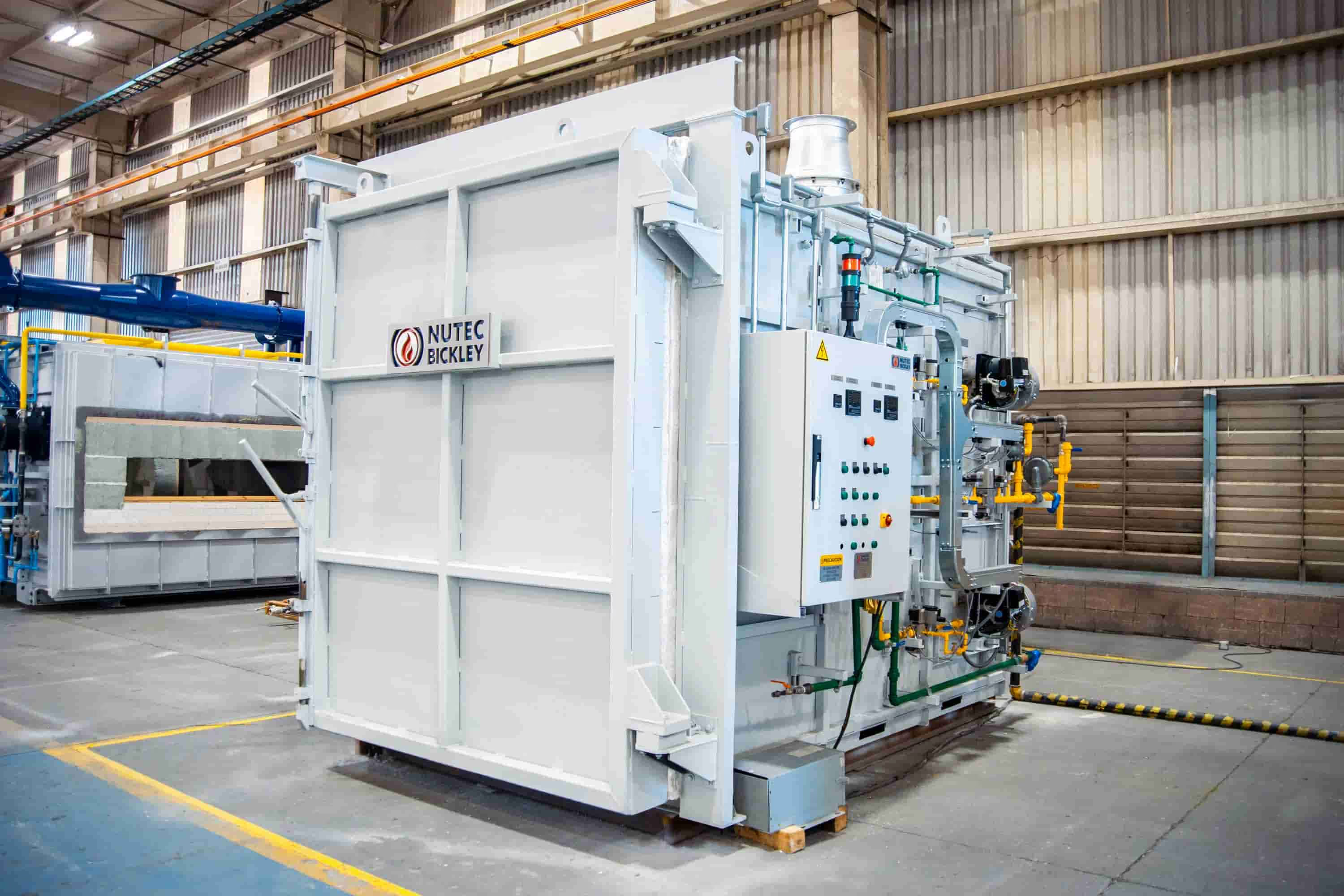
NUTEC Bickley pyrolysis furnaces use radiant elements that isolate the flame from the inside of the process chamber and transfer heat uniformly and in a controlled manner to the load, providing homogeneous thermal distribution and a more stable pyrolysis process.
Thermal Insulation System
The thermal insulation system consists of high-efficiency ceramic fiber modules, attached to the furnace steel structure through a metallic anchoring system specially designed to withstand the thermal cycles typical of the operation.
This system minimizes heat losses, improves energy efficiency, and helps maintain uniform temperature distribution inside the furnace.
Control and Safety System
Safety is one of the most important aspects of a pyrolysis furnace. Because combustible gases are generated during the process, the equipment incorporates multiple protection systems to ensure safe operation.
The main safety functions include:
- Monitoring air and gas pressures within safe operating limits.
- Verification of proper furnace door closing and sealing.
- High-temperature protection in the process chamber
- High-temperature protection in the afterburner chamber.
- Flame supervision and flame failure detection in the burners.
- Automatic purge, ignition, and safe shutdown sequences for the combustion system.
- Automatic fire suppression system, designed to act immediately in the event of any abnormal condition that could compromise the integrity of the furnace or the load.
The integration of these systems allows the furnace to operate safely, reliably, and in accordance with international best practices for heat treatment equipment using pyrolysis
What should be considered when evaluating pyrolysis technology?
When evaluating a pyrolysis furnace, safety is probably the most important aspect. Because combustible gases are generated during the process, the equipment must incorporate all necessary protection devices to ensure the safety of personnel, the facility, and the furnace itself.
A pyrolysis furnace that does not have a properly designed safety system can represent a significant risk of fire or uncontrolled combustion. For this reason, the design of the combustion system, instrumentation, and control logic must work together as an integrated protection system.
Another essential aspect is process visibility. The operator must have all the necessary information to monitor the equipment status in real time, including temperatures, burner status, alarms, pressures, operating sequences, and safety conditions. NUTEC Bickley furnaces incorporate a state-of-the-art PLC and a graphical interface, or HMI, that allows intuitive operation, continuous process monitoring, and event logging to support equipment diagnostics and maintenance.
From a design standpoint, it is essential that the furnace has been developed in accordance with international safety standards for industrial furnaces, particularly NFPA 86, which establishes the minimum requirements for combustion systems, safety devices, operating sequences, and protection of heating equipment.
Finally, one of the aspects that most often differentiates one technology from another is proper system sizing. The manufacturer must demonstrate that the capacity of the pyrolysis chamber, afterburner chamber, combustion system, stack, and gas handling system have been designed to process the maximum organic contaminant load specified for the equipment.
A proper design must ensure that the afterburner chamber provides the temperature, residence time, oxygen mixing, and turbulence required to achieve complete oxidation of the gases generated during pyrolysis. When any of these parameters is insufficient, visible emissions, odors, residue deposits, and even operational risks may occur.
For this reason, when comparing different technologies, it is recommended to request technical information from the manufacturer that supports the furnace’s maximum loading capacity, cycle times, contaminant destruction capacity, energy consumption, and the conditions under which the equipment can operate continuously, safely, and free of visible emissions.
At NUTEC Bickley, we design and manufacture pyrolysis furnaces that meet these criteria and the highest safety standards, including NFPA 86, to ensure efficient, safe operation free of visible emissions.