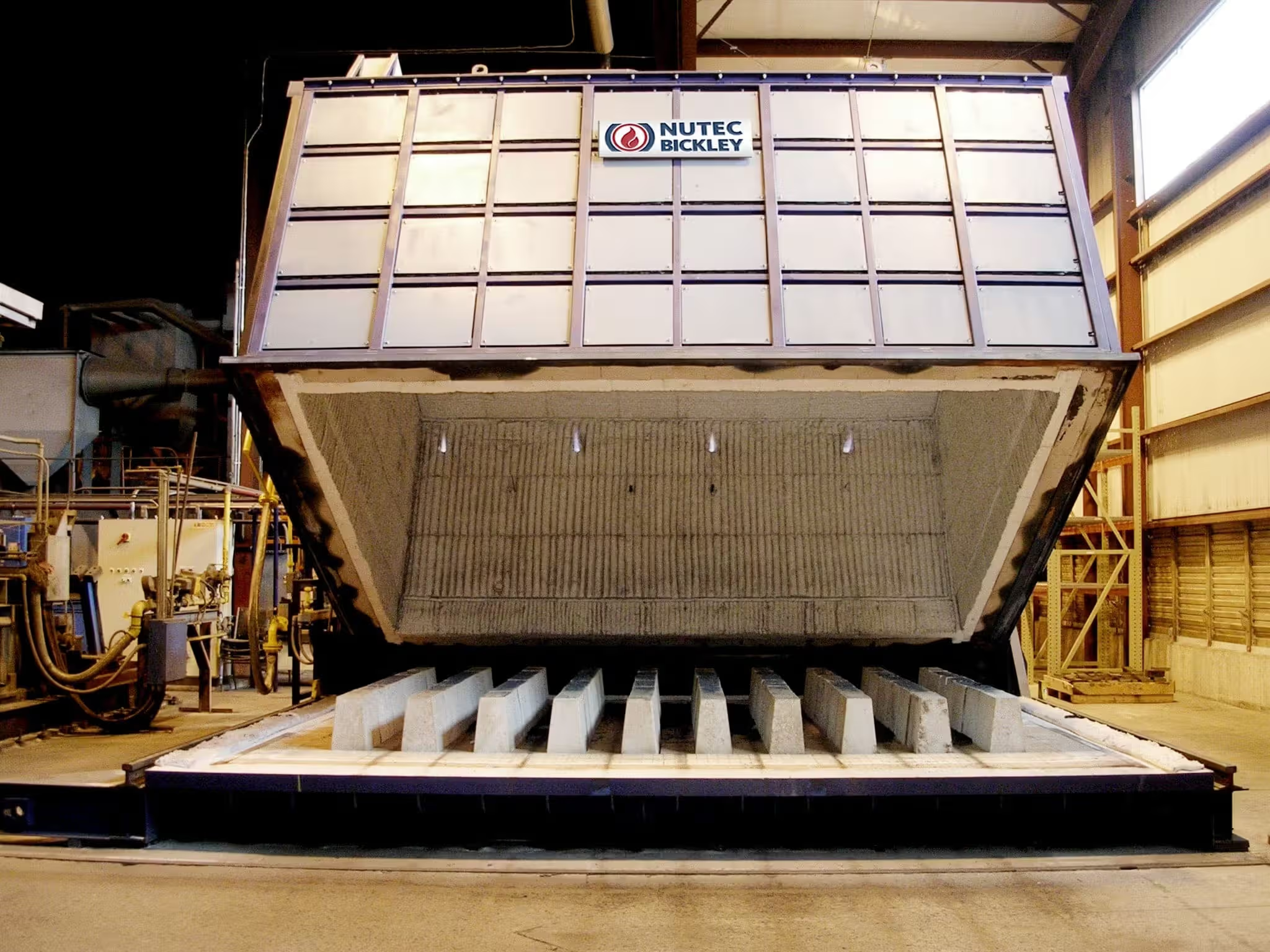
What factors should be considered when selecting a tip-up furnace?
The right heat-treating tip-up furnace should be designed considering the specific requirements of the material and facility operation. Key factors include the type, the size and the weight of the load.
Other important aspects to consider would be the processing temperature, required temperature uniformity, cycle time, and possible cooling or quenching requirements.
Considering these specifications at the beginning of the design helps ensure the furnace would meet both current production needs and future process demands.
What are the advantages of tip-up furnaces for heat treating?
Tip-up furnace arrangement offers many advantages for batch processing, including:
- Accessible loading
- Flexible treatment configurations
- Temperature control
- Integration with material-handling systems.
- Their design supports large loads, making them an option for operations that require flexible heat-treating equipment.
Can a tip-up furnace perform different heat treating processes?
If designed with an appropriate operating temperature range, a tip-up furnace can perform multiple batches of different heat treatments. They can be engineered for processes such as austenitizing, tempering, annealing, and stress relieving, performing different cycles within the same equipment.
How can tip-up furnaces be adapted to specific production requirements?
Tip-up furnaces can be engineered considering the load dimensions and weight, operating temperature range requirements, atmosphere needs, and material-handling configuration. It does allow the furnace to be integrated effectively into the customer's existing production workflow.
How does the furnace design affect temperature uniformity?
The furnace configuration, combustion system design, insulation, controls, and heating device’s location all impact temperature uniformity. For heat-treating operations where consistent metallurgical properties are important, the furnace should be engineered to achieve the required temperature uniformity across the work zone.
When should a tip-up furnace be considered instead of another batch furnace design?
A tip-up furnace arrangement may be considered when processing large or heavy loads, to achieve easy hearth access, running multiple heat-treating cycles, or benefits from integrated material handling and automation. The final choice should be based on the complete process requirements rather than the furnace configuration alone.
Are you looking for a Tip-Up furnaces?
NUTEC Bickley's tip-up furnaces provide a flexible operational process by allowing the high temperature process (austenitizing) and the low temperature process (tempering) to be executed in the same furnace, with a US presence in Tomball, Texas.