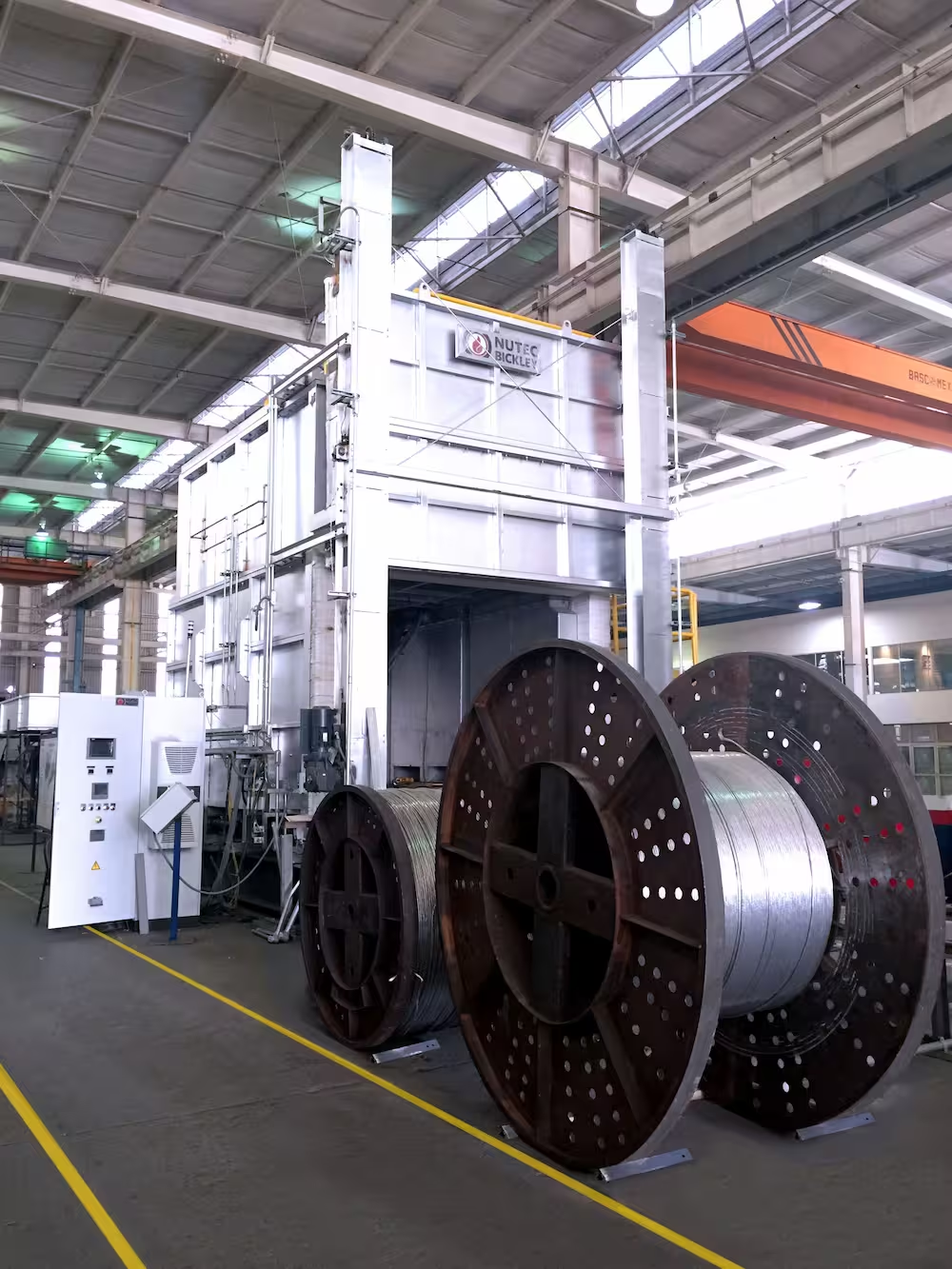
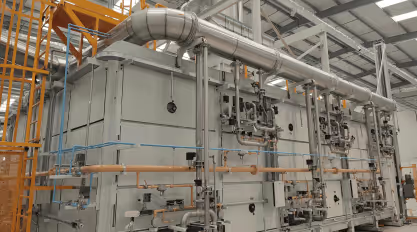
What Is a Car Bottom Annealing Furnace?
A car bottom annealing furnace is an equipment designed to heat-treat large or heavy metal parts using a rail-mounted car that moves the load in and out the chamber.
This configuration ensures safe handling from above or sides for high and heavy loads. Commonly used in steel mills, forges, foundries facilities, it provides reliable heat treatment, improved ductility, and easier machinability.
At NUTEC Bickley, we design custom car bottom furnaces with advanced controls and energy-efficient combustion or electric heating systems to meet strict metallurgical requirements. If you're considering acquiring equipment for large-scale annealing batches, our team can guide you toward the right solution for your needs.
What are the key Advantages of a Car Bottom Annealing Furnace?
A car bottom annealing furnace is ideal to handle large or heavy components. At NUTEC Bickley, we design these systems to achieve reliable metallurgical results with the highest efficiency.
1. Superior Temperature Uniformity
Optimized air circulation, high-efficiency burners or electric heating elements, and adapted insulation linings ensure consistent results across the entire load, critical for stress relief and consistent mechanical properties.
2. Heavy Load Capacity & Operational Flexibility
The rail-mounted car allows easy handling of oversized and overweight parts that cannot easily be loaded into standard batch furnaces. This design improves safety, ergonomics, and overall workflow efficiency.
3. Energy-Efficient
Modern insulation, regenerative burners, and advanced controls reduce heat loss and energy consumption, reducing total operating costs while maintaining tight process control.
What are the design considerations of a Car Bottom Annealing Furnace?
Conceiving a car bottom annealing furnace requires considering thermal performance, reliability, and production needs. The considerations include:
Chamber Size & Working dimensions
Sized to match maximum load dimensions, ensuring safe handling and proper heat circulation in between parts.
Load Weight & Material
The load weight and dimensions define car structure, refractory selection, and heating configuration to achieve consistent results.
Temperature range & uniformity requirements will affect the heating system arrangement, fan configuration, and control zoning.
Refractory & Insulation
Fiber modules, blankets, or dense refractory are selected to balance efficiency, durability, and cycle time.
Airflow & Circulation
A uniform airflow pattern increases temperature uniformity and ensures even heating across the entire load.
Controls & Automation
PLC/HMI, recipe management, and data logging support repeatability and compliance with demanding quality standards.
NUTEC Bickley is a global manufacturer of custom car bottom furnaces for heavy-duty heat treatment applications, including annealing, stress relieving, forging preheating and aluminum processing. Systems are engineered for temperatures 250 to 2460°F (120 to 1350°C), meeting AMS, CQI-9, ASTM, ASME and API standards.