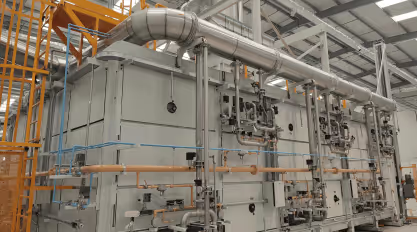
Why is it important to inspect the dampers and stacks of an industrial furnaces?
Inspecting and maintaining the flue gas extraction system of your industrial furnace is an essential practice to ensure that the combustion system operates efficiently, safely, and reliably.
The main purpose of the stacks is to evacuate the gases generated during combustion, while the damper regulates their flow and controls the furnace’s internal pressure to support fuel savings.
When obstructions, corrosion, deformation, or mechanical failures are present, the combustion balance is compromised, fuel consumption increases, and risks to personnel and facilities become higher.
Proper inspection and maintenance make it possible to detect residue buildup, gas leaks, or structural damage at an early stage. This facilitates preventive maintenance planning, reduces the probability of unexpected downtime, extends the service life of the combustion system, and increases combustion efficiency.
In addition, it contributes to compliance with environmental and safety regulations, ensuring that furnace operation remains within reliable and sustainable parameters.
Additionally, stack inspection and maintenance can provide visibility into how efficient your combustion is. If your stack shows soot buildup in the duct, you have inefficient combustion and are wasting money.
Periodic inspection of dampers and stacks not only protects personnel and facilities, but also ensures that every cubic meter of gas is converted into safe and efficient production.
What problems can an inspection of dampers and stacks reveal?
A detailed inspection of the dampers and stacks of an industrial furnace makes it possible to identify several issues that, if not addressed in a timely manner, can compromise the safety and efficiency of the combustion system.
- Obstructions: Accumulation of soot, dust, or residue that restricts flue gas flow.
- Corrosion: Damage to metal surfaces.
- Leaks: Release of hot or toxic gases through joints and connections.
- Lack of insulation: Stack sections without insulation, affecting heat recovery.
- Overheating: Overheated stack sections.
- Damage to damper blades: Broken damper blades and loss of pressure.
Detecting these issues at an early stage not only prevents major failures and unexpected downtime, but also facilitates preventive maintenance scheduling and ensures that the furnace operates within safe, efficient, and sustainable parameters.
How often should the dampers and stacks of an industrial furnace be inspected?
The inspection frequency for dampers and stacks depends on your furnace’s operating demand, type of operation, environmental conditions, and the applicable regulations in your work area.
In general, it is recommended to establish a periodic inspection program that combines quick visual inspections with more detailed technical evaluations. This approach helps maintain safety, optimize fuel consumption, and ensure compliance with quality and environmental standards.
However, the need for an immediate inspection arises when abnormal conditions are present that may put personnel safety, furnace integrity, or combustion system efficiency at risk.
These signs should be considered priority alerts that require immediate attention, as they can quickly evolve into major failures or operational incidents.
- Visible leaks: Release of smoke, hot gases, or flames through joints, connections, or around the stack.
- Abnormal noises: Vibrations, knocking, or squeaking in the extraction mechanism.
- Severe obstruction: Noticeable reduction in draft, excessive soot buildup, or residue accumulation that restricts flue gas flow.
- Advanced corrosion: Loss of metal material, perforations, or visible deformation.
- Toxic gas odor: Presence of strong odors or suspected carbon monoxide in the operating area.
- Sudden increase in consumption: Unexpected increase in fuel usage without changes in production.
What is checked during an inspection of dampers and industrial stacks?
During a damper and stack inspection, both the physical condition and the functional performance of the components that ensure proper gas evacuation and furnace draft control are evaluated.
- Structural integrity: Condition of the stack walls, welds, joints, and supports.
- Damper mechanisms: Opening/closing operation, alignment, internal pressure transmitter, and inspection of electrical connections and movements.
- Internal conditions: Presence of soot, dust, scale, or residue that may obstruct flue gas flow.
- Corrosion and wear: Evaluation of metal surfaces exposed to acidic condensates or high temperatures.
- Tightness: Verification of leaks in joints, connections, and seals.
- Associated instrumentation: Pressure, temperature, and flow sensors to confirm reliable readings.
- Regulatory compliance: Validation of parameters required by NFPA 86, ASME CSD-1, and local environmental regulations.
At NUTEC Bickley we can assist you
We have experience in various industrial processes and all the particular requirements involved
- We carry out field surveys of the relevant variables of the internal functioning of the furnace.
- We check the physical condition of your furnaces and combustion system components.
- We deliver a technical audit report detailing our findings and conclusions.
At Nutec Bickley we are specialists in industrial furnacesand their diverse components. Contact our expert advisers so they can let you know about all the solutions that we have for you.
Are you looking to optimize the overall performance of your industrial furnace?
We offer technical services for industrial furnaces to save energy, prevent unexpected outages, reduce maintenance costs, and more.


.jpeg)