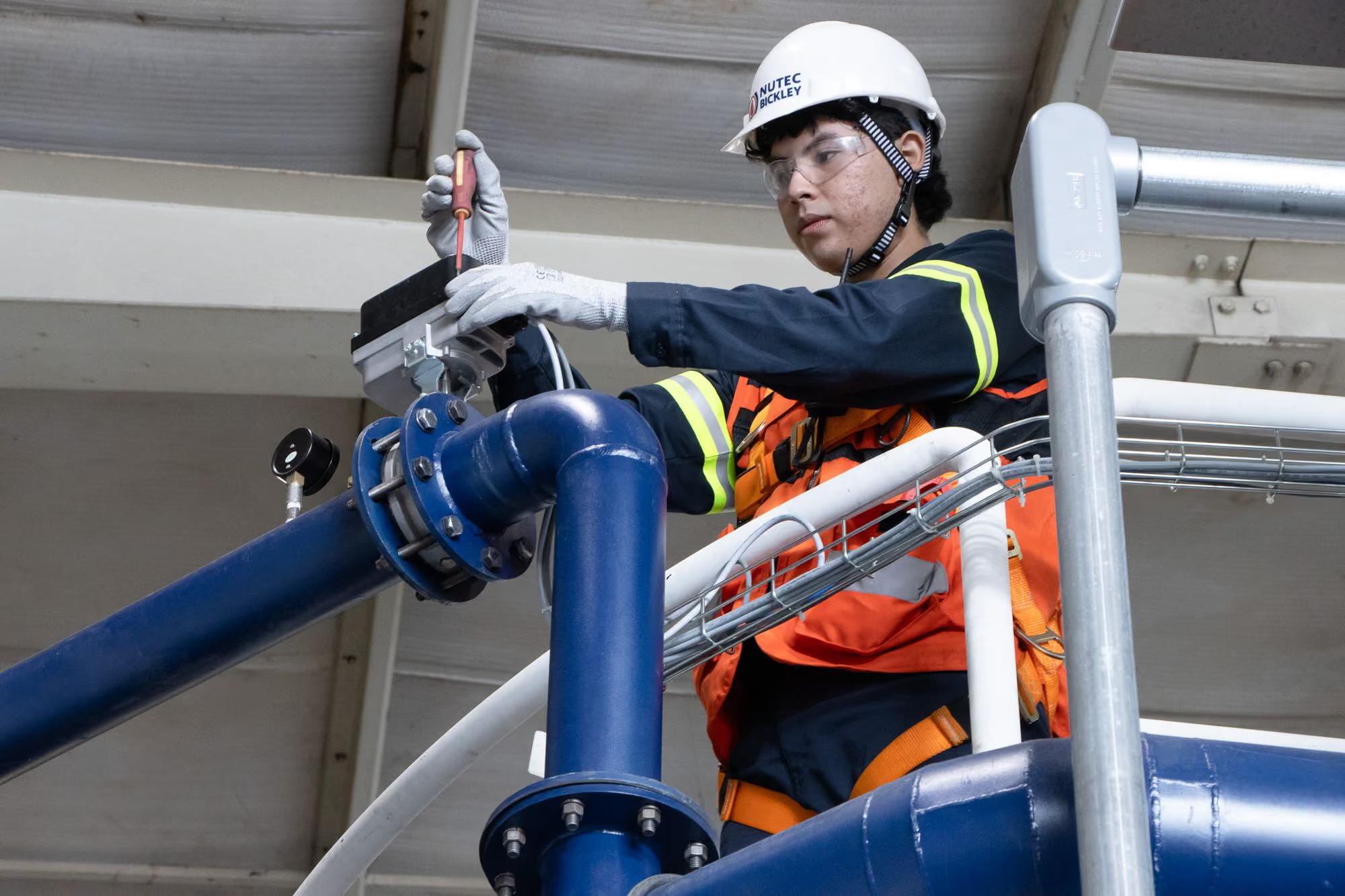
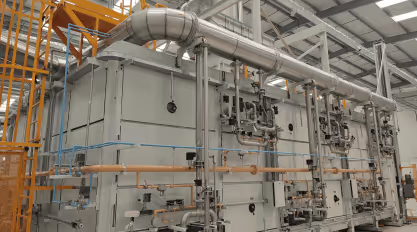
Inspection of temperature control systems in industrial furnaces is crucial to ensure product quality, considering that they serve as the core system for controlling the temperature inside your furnace.
To perform a proper inspection, you must clearly identify the elements that make up this control loop: the temperature controller, thermocouples, and actuators.
Temperature Sensor
Verify electrical continuity.
Compare readings against a reference standard.
Inspect physical installation and insulation.
Verify that the wiring, thermocouple, and configuration are the same type (J, K, T, E).
Verify proper installation and physical condition.
Controller
Validate configured parameters, including setpoints, alarms, thermocouple type, and PID.
Perform temperature simulations using certified equipment.
Test response to simulated deviations.
Confirm communication with the PLC or safety system.
Verify device calibration through certified laboratories.
Actuator
Review operation.
Perform temperature simulations using certified equipment.
Confirm proper opening and closing during functional tests.
Validate mechanical and electrical integrity.
Systematic inspection of the temperature control loop in industrial furnaces not only ensures process accuracy, but also protects the investment in equipment and helps ensure the quality of the final product.
What is a temperature controller, and how does it work?
The temperature controller is the device responsible for receiving the signal from a thermocouple, comparing it against a reference value, or setpoint, and executing corrective actions through an actuator, such as a valve, relay, or heating element.
In other words, it is the “mastermind” that regulates the temperature inside the industrial furnace, ensuring that it remains stable and within the defined parameters to guarantee quality and safety.
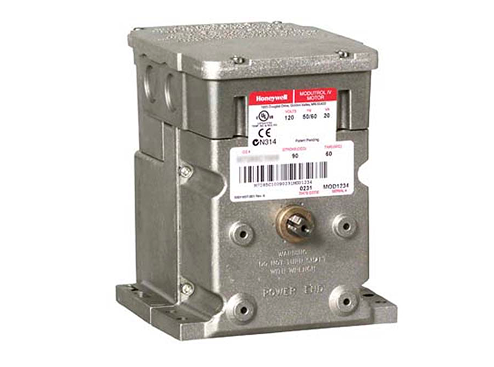
Honeywell M784
What are thermocouple temperature sensors, and how do they work?
Thermocouples are temperature sensors used in industrial furnaces.
Thermocouples are formed by joining two different metals that, when exposed to a temperature difference, generate a proportional electrical signal.
The operating principle is based on the Seebeck effect:
Two different metals are joined at a point called the “hot junction.”
When that junction is exposed to temperature, an electrical potential difference is generated.
The controller interprets that signal and converts it into a temperature reading.
In summary, the thermocouple converts thermal energy into an electrical signal that can be measured and controlled.
The key aspects to verify proper thermocouple operation are electrical continuity, material and thermocouple type compatibility, physical installation, reading comparison through simulations, and confirming that the thermocouple is protected against corrosion, vibration, or overheating.
Thermocouples are the foundation of thermal measurement in industrial furnaces. Their proper operation ensures that the controller receives accurate information and that the actuator executes the appropriate actions.
What are actuators, and how do they work?
Actuators are devices that convert a control signal into a physical action, such as operating a control valve. In an industrial furnace, they receive the command from the temperature controller and execute the necessary correction to keep the process within the established range.
In simple terms, they are the “executing arm” of the control system: they transform the controller’s decision into movement, opening/closing action, or heat generation.
Their operation is as follows:
The controller detects a temperature deviation from the setpoint.
It sends an electrical signal to the actuator.
The actuator responds physically: it opens/closes a valve, activates a relay, or regulates a heating element.
The change in the process corrects the deviation and stabilizes the temperature.
Actuators are the element that converts the controller’s logic into real action inside the furnace. Their proper condition ensures that temperature corrections are executed accurately and reliably.
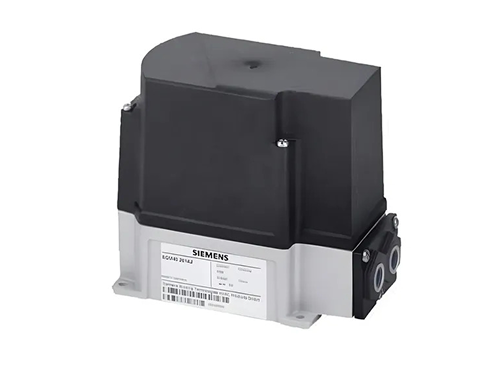
Siemens SQM40
At NUTEC Bickley, we are experts in temperature control.
We’ll help you choose the most suitable solution with the best value for your money.
We upgrade older systems with the latest technology.
We distribute spare parts from various brands for existing temperature control systems.
Providing Thermal Equipment Solutions that go beyond expectations
We serve multiple industries through the design, building and installation of combustion systems, thermal insulation and highly specialized industrial furnaces, kilns and ovens. We are focused on understanding our customers’ needs and supplying the best equipment at the most competitive price.
In a major, high-value project – the second at this particular plant in Mexico – NUTEC Bickley will supply a 125m-long tunnel kiln to one of the world’s leading advanced ceramics manufacturers.
NUTEC Bickley is in the process of transporting all modules of a 50m-long electric tunnel kiln to the advanced manufacturing facility operated by one of North America’s leading producers of ultra-high-purity alumina and associated products.
Do you want advice to select the ideal furnace or spare part for your project?
We offer specialized technical support and advice to ensure that you choose the solution that best suits your needs. Fill out this form or contact us to talk to us now.